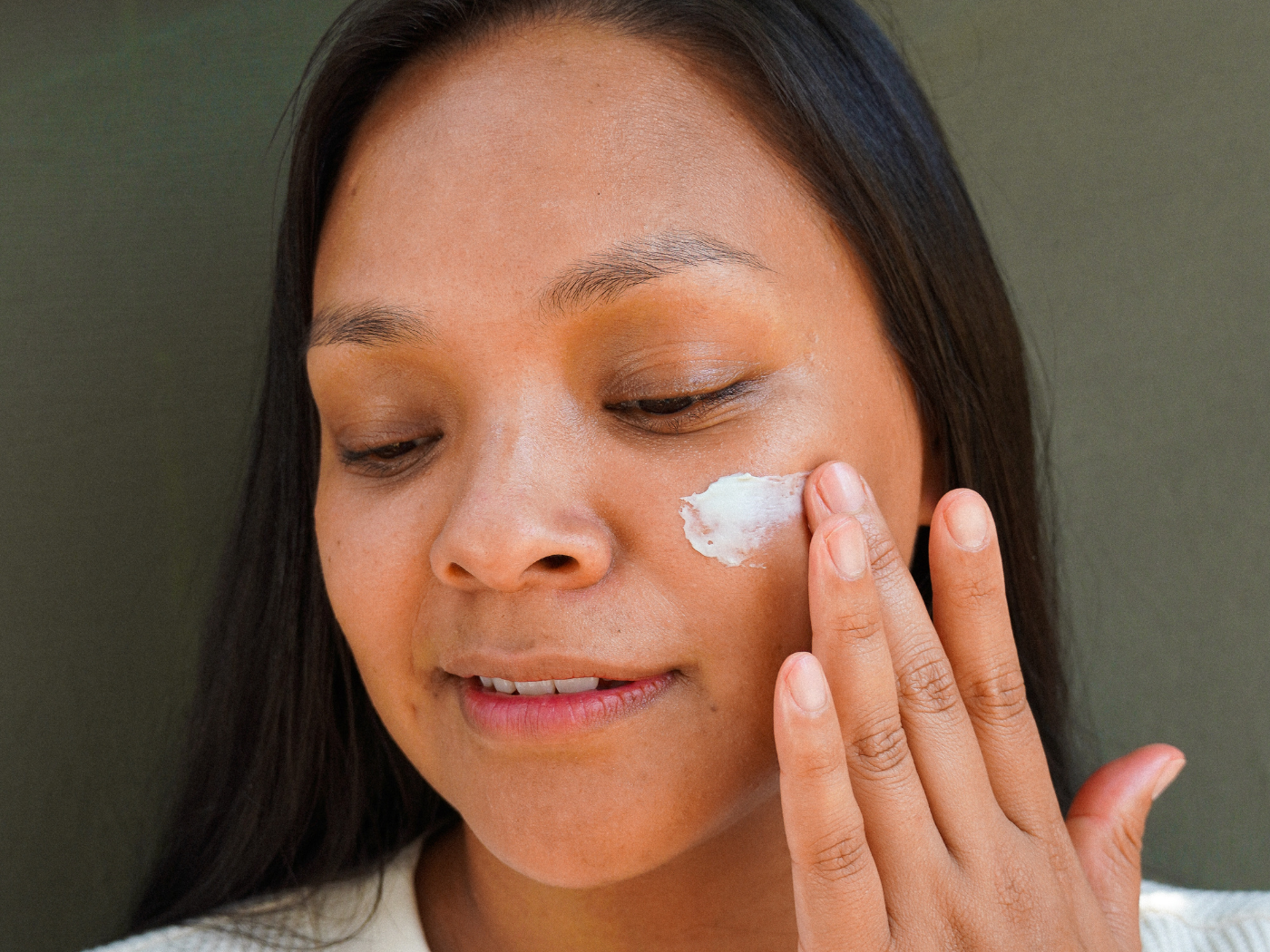
Balm vs. Moisturizer: The Difference Between Creams, Lotions & Salves
When it comes to balm vs. moisturizer, there is an important difference: a traditional water-based moisturizer helps hydrate the skin, while an anhydrous balm primarily helps soften the skin and seal moisture in.
Especially if you have dry, sensitive, mature, or barrier-compromised skin, you may find yourself wondering whether you should be reaching for a lotion, cream, balm, or salve.
They can all be beautiful for the skin, but they do not necessarily do the same thing.
One of the biggest distinctions is the difference between hydrating the skin and sealing hydration into the skin.
Balms are often marketed alongside creams and moisturizers as though they are interchangeable. But understanding what is actually inside your product, and what that formula is designed to do, can make a huge difference in building a routine that truly supports dry skin.
Is a Balm the Same as a Moisturizer?
Not exactly. Traditional creams and lotions contain a water phase and can directly contribute water-based hydration to the skin. Most balms are anhydrous, meaning they contain oils, butters, and waxes rather than water.
Balms are particularly useful for softening the skin, protecting the skin barrier, and reducing moisture loss. That is why they can work so beautifully when layered over a moisturizer.
Hydrating vs. Sealing: Why the Difference Matters
When we talk about hydration, we are talking about water.
A traditional facial lotion or cream is generally an emulsion, meaning it contains both a water phase and an oil phase. Water, aloe vera, hydrosols, and other water-based ingredients help provide hydration, while oils, butters, humectants, emollients, and occlusives help soften the skin and slow moisture loss.
A balm or salve is different.
Balms are typically anhydrous, meaning they are formulated without water. Instead, they are made primarily from oils, butters, waxes, tallow, or other oil-soluble ingredients.
This makes them wonderful for softening, nourishing, protecting, and creating an occlusive layer over the skin.
A balm does not supply water to the skin in the same way a water-containing lotion or cream does. Its greatest strength is helping keep the moisture already present in your skin from escaping.
That is why we love using both.
What Is a Lotion?
Lotions generally contain a higher percentage of water than creams, giving them a lighter consistency that absorbs relatively quickly.
They can be especially helpful for normal, combination, or mildly dry skin, or during warmer months when you want hydration without a heavier finish.
Think of lotion as the lightest of the three categories.
What Is a Cream?
Creams also combine water and oil-based ingredients, but they are generally richer and more substantial than lotions.
A well-formulated cream may include several types of ingredients working together:
- Humectants, such as glycerin or hyaluronic acid, help attract and hold water within the skin.
- Emollients, including botanical oils and butters, help soften and smooth the skin while supporting the skin barrier.
- Occlusives help reduce water loss by creating a protective layer on the skin.
This combination is one reason creams can be especially helpful for dry, sensitive, mature, or compromised skin.
What Is a Balm or Salve?
A balm or salve is generally made primarily from oils, butters, waxes, and other anhydrous ingredients.
These products can be incredibly beneficial for dry skin. They can:
- Soften rough or flaky areas
- Reduce moisture loss
- Protect the skin from cold, wind, and dry air
- Support the skin barrier
- Seal other skincare products underneath
What they generally do not contain is a significant water phase.
That distinction matters.
If your skin is dehydrated and you continually apply only oils or balms over completely dry skin, you may be creating a beautiful protective barrier without providing the water-based hydration your skin is craving.
A balm over hydrated skin, however, is where the benefits of layering really shine.
Why We Pay Attention to the Word “Moisturizer”
The word moisturizer is used very broadly in the skincare industry.
You may see an anhydrous balm marketed as a facial moisturizer because it leaves the skin feeling soft, supple, and protected. And to be clear, ingredients that reduce water loss absolutely contribute to moisturized skin.
But softening the skin, supplying water-based hydration, and preventing water loss are not identical functions.
That distinction becomes particularly important for someone dealing with chronically dry, irritated, flaky, or barrier-compromised skin.
We have noticed more anhydrous facial balms being marketed in the natural skincare space as replacements for traditional creams. There is nothing inherently wrong with an anhydrous formula. We make and love balms ourselves.
The important thing is simply understanding what you are buying.
A beautiful balm can be exactly what your skin needs. But if you are expecting it to perform like a water-containing cream, you may be disappointed.
Water-Based Products Require Responsible Preservation
There is another major difference between creams and balms that consumers do not always see: preservation.
Any skincare formulation containing water, aloe, hydrosols, or another substantial water phase creates an environment where bacteria, yeast, and mold can potentially grow.
That means water-containing skincare products require an appropriate preservation system.
Formulating a stable emulsion and preserving it responsibly adds another layer of complexity to product development, but it is an essential part of making safe skincare.
At Skin Balm Apothecary, we do not believe “preservative-free” automatically means better.
When preservation is necessary, we use carefully selected preservatives because protecting a water-based product from microbial growth is simply part of responsible formulation.
An anhydrous balm, on the other hand, generally has very different preservation requirements because it does not contain the same water environment microorganisms need to proliferate.
How to Tell What You Are Actually Buying
One of the easiest things you can do is read the ingredient list.
For a traditional water-containing lotion or cream, you may see ingredients such as:
- Water
- Aloe vera
- Hydrosols
- Glycerin
- Hyaluronic acid
- Emulsifiers
- Botanical oils and butters
- A preservation system
For an anhydrous balm or salve, you are more likely to see:
- Botanical oils
- Butters
- Beeswax
- Plant waxes
- Tallow
- Oil-soluble botanical extracts
Pro tip: look at the first few ingredients.
Ingredients are generally listed in descending order by concentration. If the beginning of the ingredient list is primarily oils, butters, and waxes with no water, aloe, or hydrosol, you are probably looking at an anhydrous balm rather than a traditional cream or lotion.
Learning to read ingredient labels takes much of the guesswork out of skincare marketing.
Can You Use Balm Without Moisturizer?
You can, and there may be times when a balm alone is exactly what your skin needs. But if your skin is dehydrated, very dry, or prone to flaking, you may benefit from applying a water-containing product underneath your balm.
A balm applied to bare, dry skin can soften and protect the surface. A balm applied over hydrated skin can also help slow water loss and keep that hydration from escaping as quickly.
For many people with dry skin, the combination works better than relying on either product alone.
How to Layer Lotion, Cream, and Balm
You do not necessarily need to choose between them.
For dry skin especially, layering water-based hydration with richer, more occlusive products can be incredibly helpful.
A simple rule is to move from your lightest products to your richest.
1. Start With Your Lightest Hydrating Products
After cleansing, begin with toners, mists, lightweight serums, or lotions.
These give the skin water-based hydration underneath your richer products.
2. Follow With Your Cream
Next, apply your cream or richer moisturizer.
This provides another layer of hydration while introducing oils, emollients, and other barrier-supportive ingredients.
3. Seal With a Balm
Finally, apply your balm or salve.
Because these formulas tend to be the richest and most occlusive, they can help slow the evaporation of water from the skin and keep the layers underneath where you want them.
For very dry skin, this final step can make an enormous difference during cold weather.
Think hydration first, sealing second.
My Cold-Weather Routine for Dry, Flaky, and Irritated Skin
As someone who experiences chronically dry, flaky, red, and irritated facial skin, my fall and winter routine focuses heavily on layering moisture-rich products.
I also try not to over-cleanse.
During colder months, I typically cleanse my face only at night unless I am doing a gentle oil cleanse in the morning.
Here is what my moisture-focused routine often looks like:
1. Firming Serum and/or Awake Coffee Serum
I begin with a serum underneath my richer products.
2. Blue Tansy Ultra-Rich Moisturizer
This is my primary cream step and an especially important part of my routine during colder weather.
Shop Blue Tansy Ultra-Rich Moisturizer
3. Baby & Mom Balm
Next, I layer Baby & Mom Balm over my moisturizer for additional richness and protection.
4. Glow Balm Unscented
When my skin needs even more support, especially in fall and winter, I layer Glow Balm over particularly dry areas.
5. Mineral SPF
During the daytime, sunscreen is my final skincare step.
6. The Eye Balm™
My eyelids are one of my biggest problem areas for dryness and irritation, so I use The Eye Balm™ when I need extra moisture and protection around the eye area.
During warmer months, I make adjustments and do not always need quite this many rich layers. But when the weather turns cold and dry, this type of routine works beautifully for my skin.
Can You Use Too Many Layers?
You certainly do not have to use every category every day.
Some people may do beautifully with a serum followed by a cream. Others may need a cream plus a balm only on the driest areas. And those with extremely dry skin may love several layers during winter.
The goal is not to see how many products you can put on your face.
The goal is to understand what each product is doing so you can give your skin what it actually needs.
If your skin feels tight and dehydrated, look at your hydration steps.
If your skin feels comfortable immediately after moisturizing but becomes dry again quickly, adding a richer cream or balm may help reduce moisture loss.
And if you have been applying balm after balm to chronically dry skin without seeing the results you expected, consider what may be missing underneath it.
Balms and Creams Are Better Together
We love balms. Skin Balm Apothecary quite literally has balm in our name.
But loving balms does not require pretending they are identical to creams.
Each serves a different and valuable purpose.
Lotions provide lighter hydration.
Creams provide richer hydration and barrier support.
Balms and salves soften, protect, and help seal that hydration into the skin.
Understanding those differences gives you the freedom to build a routine around what your skin genuinely needs instead of relying solely on whatever name appears on the front of the jar.
And for those of us battling dry winter skin, sometimes the answer is not choosing between a cream and a balm.
It is knowing how to use both.
Not Sure What Your Skin Needs?
Explore our in-depth skincare guides to learn which products may work best for your skin and how to layer them together.
- Blue Tansy Moisturizer vs. Repair Cream
- Glow Balm vs. Baby & Mom Balm
- Summer Skincare Routine for Your Skin Type
- How to Read a Skincare Ingredient Label
You can also explore our full Skincare Blog for comprehensive skincare guides or take our Skin Type Quiz for personalized recommendations.